domingo, 20 de fevereiro de 2022

Paul Armfield (Renegade, Red, White Heat, Déjà Vu)

 Paul Armfield

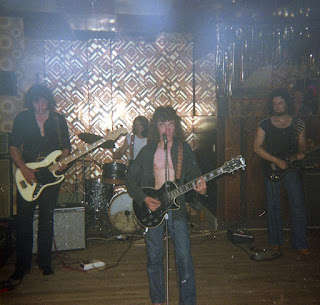
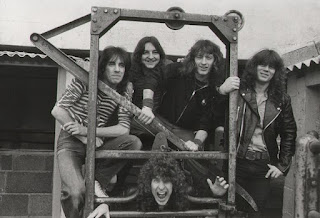
Paul Armfield was the lead singer for many bands during the 80's. Renegade, Red, Ryder, White Heat and Déjà Vu, with whom record some demo tapes that were compiled by High Roller Records in recent years.

Q. - Hello Paul, tell us a little bit about your beginnings in the rock'n'roll world, who were your main influences, what lead you to be a rock singer?

Paul - In 1969, I was listening to Deep Purple. And I like Ian Gillan as singer.

So, I started to sing and play guitar 🎸. I was 14 years old. In one year, I joined a band called Liquid Gas and we play some big gigs. In 1970 l joined a band called Vena Cava and we also have some great gigs too.


Q. - Tell us a bit about the origins of Renegade, how did it all start?

Paul - In 1975 I joined a band called Cive and we were active for a long while, then in 1979 I joined a new band called Renegade. They were looking for a singer, I answered to the ad and I was chosen to sing in the band. We write all our own song's, Lonely Road, Last Thought, Lock The Door and The Last Warrior.

Q. - The single "Lonely Road / Last Thought" came out in 1980, how did that happen?

Paul - We write the songs altogether. We had a record company called White Witch Records. We recorded on records. No CDs at the time.

Q. - Later on you got some real trouble with your manager that lead to the break of Renegade, can you tell us happen?

Paul - The manager of the record company went off with our money, he's name was Gary Abbott. He went off with some other bands money too, he went off to Belgium with all the money.


Q. - Did you get support from the media back then? Radio, magazines, fanzines?

Paul - Yes Renegade was on the radio station and in the newspapers. And after that we broke up, Renegade was active from 1979 to 1981.

Q. - For a brief period, you were in Ryder, what can you tell us about this unknown band? Did you record any demos with Ryder?

Paul - In 1981 I joined the rock band called Ryder. We played some big gigs and done one demo tape.

Q. - When did you join Red? Were you a founding member?

Paul - In 1982, I was asked to sing 3 songs with a rock band called Red. Fathers Son, Time To Go and Red. Very good songs. They asked me to join the band but I said no because I was going to join another rock band called White Heat.

Q. - There was a demo tape recorded in 1982, what memories do you keep from this band?

Paul - The guitar player in Red was called Raul Grenas. A great guitar player, he is now in a band called Luzbul, in Mexico, and they are doing really good there. Red done a demo with 3 songs and after became ME262.


Q. - Next step you joined White Heat, how did that happen?

Paul - I was in White Heat and recorded 2 songs with them, on a demo tape in 1983, Hide to hell and Missing You.

We played lots of big gigs in Holland, one of them with Uriah Heep. Played the Brixton Academy, good days. White Heat was looking for a singer so I got the job. I was in White Heat from 1983 to 1987.

Q. - Deja Vu was formed in 1987, tell us a bit about it please.

Paul - I joined Deja Vu in 1987 and stayed until 1991. We played lots of big gigs in London and was good band. l left the band because I have to look after my two children and take care of them. The band finished when I left.

Q. – How did the idea to compile Renegade and Red came up?

Paul - The idea came up because 2019 High Roller records run me and said they were interested in both bands and do a compilation and I said yeah that’s fine and they did the cd. John Tucker wrote the liner notes.


Q. - Do you keep in touch with the other former members of Renegade, Ryder, Red, White Heat or "Déjà Vu"?

Paul - The only members of Renegade that I keep in touch is the guitar player, the other ones I don’t know what happened to them, I keep in touch with the guitarist Steve Welsh. Red, I still speak with Raul he is a guitar player in Mexico and I speak with him in Facebook, all the other ones disappeared I don’t know where they gone. White Heat, High Roller Records did a compilation of the band, but I don’t keep in touch with the former members of the band, I don’t know where they are now. Deja Vu, I keep in touch with the guitarist, he lives in Berlin, the other ones I don’t keep in touch.

Q.- What was it like to start a metal band in the late 70s? Did you realize, that something as big as the NWOBHM was going on around the UK?

Paul - I didn’t knew about the NWOBHM at that time, the first time I’ve heard about it I had no idea of it and I was surprised. I start reading about it and I understood that I was part of the History, so that’s good for me.

Q. - Are you still active in rock music these days? Do you still have any band?

Paul - I would like to bring back the band Déjà Vu, that's what I'll try to do in the future and record the songs we wrote.


Q. - Do you keep an eye to hard rock and heavy metal music nowadays?

Paul - I still listen to Deep Purple, it’s one of my all-time favorite bands. I listen mostly to older bands, I don’t like new bands. Pink Floyd, Led Zeppelin, Black Sabbath, Scorpions, I think there were better musicians back in the day than actually.

Q. - How do you want to end up this interview? Anything more you want to say?

Paul – Nice to talk to you, cheers.

Thank you for your time, and wish you all the best for the future!


sábado, 5 de fevereiro de 2022

Mike Howard (Skitzofrenik)


Here's an interview with Mike Howard, bass player from the band Skitzofrenik, they were active between 1979 and 1983, and recorded the single U.S.A in 1981. Apart this single, two more tracks made it to the compilation “Roxcalibur” (LP, Guardian Records N’ Tapes, 1982): ‘Exodus’ and ‘Keep Right On’.

Q. - Hello Mike, tell us a bit about the origins of Skitzofrenik, how and when did it all start? Who were the first members of the band?

Mike - Brian Wikson Rhythm Guitar (Skippy). Chris Branley Bass (Snuff). Mike Muskett (Muski). Lead Guit, and Ian Fleetham (Feef) Drums.

Q. - Who would you cite as your major influences at that time?

Mike - Collectively at that time It was Deep Purple/ Black Sabbath/ Rainbow/ Judas Priest etc.


Q. - Where did you record the 81 single "USA"? Was it a self-produced or did you work with a professional producer? Were these songs recorded in order to record an LP?

Mike - Single recorded at Guardian Studios Durham and was on their label only 500 were pressed Produced by the band engineered by Terry Gavaghan. It was a one-off project at that time.

Q. - How was the single "USA" received by the fans? Did it have airplay on radio stations? Did Skitzofrenik got support in the media from the legendary BBC Dj Tommy Vance?

Mike - The single was received well enough to almost sell out It got local airplay- This was before Tommy Vance's rock show- It did go to several record companies who were interested in our demos that we had previously sent out.

Q. - How about shows? Did you play regularly in the UK back then? Did you share stage with other well-known bands?

Mike - We only played in the north of England We did share a stage with AXIS one time, whose lead guitarist Mick Tucker went on to Join TANK.


Q. - In 1982 comes the compilation "Roxcalibur", with the songs "Exodus" and "Keep Right On", how did that happen?

Mike - We recorded the Roxcalibur stuff in late '81 as we were regulars at Guardian then, along with the other bands I presume.

Q. - Was there any promotional tour after the release of this compilation? Are there any other Skitzofrenik recordings besides the Roxcalibur and the 81 Single ones?

Mike - We were asked on to the local radio stations rock show 'Street Level' Hosted by Roger Lewis along with most of the other bands as a 'Roxcalibur special'... we also promoted a launch gig for us and Black Rose at Middlesbrough Town Hall... There are many SKITZOFRENIK demos all featuring in the new album...

https://www.sonicagerecords.com/_shop/index.php?route=product/product&product_id=71235


Q. - When did "Skitzofrenik" split up? What happened that lead to the split?

Mike - The band split up for the want of a good singer. Charlie Gannon left the band in '81 to be replaced with Billy Westmoreland who sang on the single and Roxcalibur sessions, the band sacked him but kept on writing a whole albums worth of new material (with a view to record an album) with replacement singer Steve Ayre but after a while it wasn't working.

Q. - What do you think that lacked to "Skitzofrenik" to have a successful career?

Mike - We should have sought some sort of management, but thought we could do it ourselves.

Q. - Did you stay in touch with the other former members after the break?

Mike - I stay in touch with Ian who I see regularly, but since the album project this last year, 6 of the 9 surviving members are all now in touch including our 2 roadies Alex and Geordie so that’s been great after all this time.


Q. - What other bands did you play after "Skitzofrenik"? Tell us a bit about it please.

Mike - Myself (Bass) and Ian have worked together on and off since the break-up of the band doing different styles of music, some original music and covers. We are currently in the rock covers band ToldYaOnce.  https://www.facebook.com/ToldYaOnce5

Q. - Have you ever thought about doing a compilation on cd with all the songs recorded by "Skitzofrenik"?

Mike - See link to the anthology album.      

https://www.sonicagerecords.com/_shop/index.php?route=product/product&product_id=71235

Q. - In the late 70s did you feel that the NWOBHM was reaching to a higher point, in the whole UK?

Mike - Yes, we did.... we were at the later stage moving towards Prog a bit.


Q. - Do you keep an eye to hard rock and heavy metal music nowadays?

Mike - Not so much, there’s not enough original stuff around that I like just have way too many tastes but Rocks number one!!

Q. - How do you want to end up this interview? Anything more you want to say?

Mike - We are all very proud of the Anthology album and it’s getting some great reviews!! I’d like to thank you for your Interest.

Thank you for your time, and wish you all the best for the future!

segunda-feira, 1 de novembro de 2021

Dreamcatcher (Chris Garrel)


Q. – Hello Chris!

Chris: Hello Paulo, I’m glad to talk to you again!

Q. - "The Road So Far" is out there already, where was it recorded?

Chris: Vocals, guitar and bass were recorded at Dreamcatcher’s home studio. Drums were recorded at Studio de la Vimondière by Vincent Liard.  We went back to Axel Wurstorm’s Walnut Groove Studio for mixing and mastering. We were both so happy with Axel sound production on our previous album ‘Blood On The Snow’, that we decided to work again together. He has done a fantastic job on ‘The Road So Far’      

Q. - Was it a lengthy writing process?

Chris: Well…Yes and not. Some songs were written during the lockdown, but most of the album was written between January and March 2021. We had a band meeting on December 2020 and, as soon we decided to record our new album to celebrate Dreamcatcher 20th anniversary and as soon as we have recruited our new guitar player Bastien Lemoine, things went really fast. Basic tracks were composed by me and our bass player, Alexx Qen, then Bastien added his guitar parts and Thierry Thuane, our drummer, did the same for the drums. Then it took only two months between April and May 2021 for the album to be recorded.


Q. - The line-up was completely changed, what was the main reason for this?

Chris: That’s life, Paulo, people come and go in our lives. Geoffroy Lacarrière, one of our guitar player and main composer, left us to join Azziard, a Black Metal band. Vincent Liard our bass player was too busy with his new recording studio to carry on playing with us. It feels like Nicolas Costes, our drummer and Djo De Keiser our other guitar player simply lost interest in playing with Dreamcatcher.

Thankfully, my new partners in crime, Alexx, Bastien and Thierry are completely dedicated to the cause of Dreamcatcher.

Q. - Is the road still full of obstacles and challenges?

Chris: Yes, that the way it is, when you play in an underground Heavy Metal band, Paulo. You have to accept and deal with events as they occur, with a composed state of mind. Never surrender and do your best, day by day, step by step, albums after and albums, gigs after gigs. That's our philosophy. Each step is a new challenge and a triumph against adversity.

Q. - How do you manage to be alive and well after 20 years?

Chris: I’m a stubborn person who never gives up!

Q. - Your lyrics are full of references to Native American culture, is this a matter that you like to read about and that you like to follow?

Chris: Yes, since I was a kid, I read a lot of books, watched a lot of films about this matter and it became one of my passions. There are so many things to write about this culture such as history, mythology, connection with nature…


Q. - Do you keep an eye on what's going on actually on the Indian Nations?

Chris: Yes, I’m particularly pleased with the controversial Keystone XL oil pipeline termination. This is great news for the tribes who have been fighting to protect their people and their lands.

Q. - What made you write shorter songs with a more direct approach on this album?

Chris: We needed to get back to the basics of what Dreamcatcher really is, a Heavy/Thrash metal band. This more direct approach may be related to the fact that the album was written and recorded during a short length of time. Being able to be free again and to get out after the lockdown/curfew period also created this sense of urgency.  

Q. - How did the idea of record "Silent Bloody Night" came up?

Chris: As you may know, this song is a mix between traditional song ‘Silent Night’ and our song ‘Blood On The Snow’ which was featured on our previous album. I’ve always been a fan of Christmas songs. I wanted to do this for a long time with Dreamcatcher. So when the opportunity came up last year, I had a chat with Alexx and I explained my crazy idea to him. That’s how we decided to shoot a Christmas video for this song and called it ‘Silent Bloody Night’. We were so pleased with the response we got to this video that we decided to recorded it again as a bonus track for the new album.

Q. - Is it still difficult to rehearse because of this pandemic situation?

Chris: No, Paulo thankfully, that’s fine, we’re back to normality


Q. - What expectations do you have for this album and for the future of Dreamcatcher?

Chris: As you said in your review, Paulo, this is definitely a solid album, with great songs and great sound production. It’s one of our best if not the best to date, in my opinion. It’s a great way to celebrate our 20th birthday. We’re so proud of this album that we hope people will enjoy it as much as we do. We have done our part, it’s up to you guys, now!

Q. - Are there any plans to record a live album in the future?

Chris: Not at the moment

Q. - Anything more you want to say, to end up this interview?

Chris: I would like to thank you sincerely, Paulo, for your continuous support over the years. Your help and friendship is significant and it is very much appreciated.

quarta-feira, 13 de outubro de 2021

Colin French (TNT)


From Kent, England, comes TNT, they recorded a 3 song demo-tape in 1982, and the single "Back on the Road" in 1984. we had a chat with guitarist Colin French about his times in TNT.

Q. - Hello Colin! Tell us a bit about the beginning of TNT, how did it all start? How did you get in touch with the other members?

Colin - After being bitten by the music bug back in the 1970's after seeing bands like The Sweet, Geordie, Status Quo and the like on TV it was something I wanted to do as well, but I didn't pick up a guitar until years later in my last year of school. Mark was a friend of a friend and I saw him playing guitar and he showed me a couple of chords and we jammed together on some Free, Budgie  and Rush songs and looked around for some other musicians went through a few until finding as drummer called Nick Avery who was technically well advanced. This allowed us to put a set together of our favourite songs and our first gig which we did as a trio featured songs by Rush, UFO, Van Halen, Judas Priest and Montrose amongst others. After a few months Nick left for university and I was approached by Gary Stevenson of a band called Montreaux who were a local quartet which I joined and at the first rehearsal their singer decided to quit music! And after a bit of persuading I managed to get Mark to join as the singer and ditch the bass which he reluctantly did. So the quintet was formed and we kept the TNT name as it was the more well known band at the time.

Q. - Who were your main influences at the beginning?

Colin - Well growing up, unknowingly, The Sweet were both Gary and my favourite group. Nick was a huge Alice Cooper fan Nobby was into Black Sabbath and Mark's favourite band was The Beatles so a good mix of influences. Collectively we were Deep Purple, UFO and Def Leppard fans amongst others.

Q. - What about gigs, did you play all over the UK or was it hard for a heavy metal band to be booked at that time?

Colin - We played local bars for awhile then started putting on our own shows on in local halls and bigger venues, the rock scene was really growing with the success of the NWOBHM at the time and we started playing further afield and scoring some good supports in London with TANK and The Dirty Strangers. We did play in the midlands, the home of heavy rock, at selected venues but it was hard to tour due to financial difficulties.


Q. - At this time did you play some covers too, or was it only your own songs?

Colin - With the formation of the quintet it was decided then that we should be an original band we did have original material in both camps so we did get and original setlist together but we included the odd cover here and there to keep the audiences happy. I remember covering The Godz - 'Under the Table', Judas Priests Fleetwood Mac cover 'Green Manalishi', Sammy Hagars 'This Planets on Fire' and Y&T's 'Dont Wanna Lose.'

Q. - "End of the Line" and "Sweet Freedom" were recorded as a demo tape back in 82, was it your first experience at studio? What memories do you keep from these recording sessions?

Colin - Montreaux had already been in to record 'Sweet Freedom' the previous year with their original singer so they had recorded before but it was all new for Mark and Myself.

We were very pleased with the recordings at the time even though we knew it was on a budget, but it captured the spirit of the band which was the important thing. Good memories as we were all learning together and on an even keel.

Q. - What memories do you keep from the BBC Session from 1983? A day to remember?

Colin - Even though it was the BBC, the equipment was very primitive and I think that session was done in mono!  But it was great fun and we got to a couple of jingle ads for the show using our songs and of course it was great to hear our songs back on the radio which I think we used as part of the demo to get the Neat single deal.

Q. - The single "Back on the Road" came up in 1984, did it have airplay on radio stations? And how was it received by TNT fans?

Colin - As far as I remember it had good independent radio play nationally and the reviews were generally good although the sales didn't necessarily reflect that lol.  It was a mixed bag with the fans, many were pleased to have it but some thought it wasn't as heavy as our live show versions.

Q. - Did you try to approach a record deal with Neat (or any other label) after recording the single? What do you think went wrong with TNT to achieve real success?

Colin - Naively we thought the single would alert the major labels to our presence so we didn't actively chase an album with Neat although the producer Keith Nichol liked the more commercial aspect of the material but Dave Wood the manager of the company knew that Raven and Venom were still doing good business so was a bit weary to change.


Q. - "Sorry" appeared on the compilation Metal Warriors (Ebony Records, 1983), how did that happen?

Colin - I think we responded to an advert in the back of Kerrang that was looking for bands for the compilation albums they were putting out at the time which were doing pretty good business.

Q. - From the ashes of TNT, came Sweet Cheater, how did the idea to form this band came up?

Colin - Mainly it was out of respect for Mark who had left the band,  and with the new vocalist coming in and the slightly heavier direction the band took we felt a name change was a good idea.

Q. - For how long were Sweet Cheater active? Did you record any demo tapes?

Colin - Sweet Cheater was adopted as a new band name when we moved to London in the summer of 1985, although as TNT we recorded a four track demo to show off the new sound. The name lasted until the beginning of 1987 when the band finally split.

While in London we had done some gigs with Rock Goddess and Kooga and attracted the interest of John McCoy of Gillan and we set about recording an album with him at Scott Gorham's studio but we couldn't raise the funds to finish it. We did  a good two track demo produced by John called 'Rock Steady', which was a more commercial and more professional sounding recording than the previous 4 track tape but didn't attract more than a casual interest from the labels that courted us whilst in London.


Q. - Did you stay in touch with each other’s all over the years?

Colin - After a cooling off period lol, due to musical differences, there were two bands playing the bands material one added keyboards [Back Talk}and the other got more gritty sounding like early Aerosmith {Gunslinger} ' Gunslinger' was my band with Gary Owen and I had another band called 'Lynx'  Lynx released an unrecorded Sweet Cheater  single 'Caught in the Act', and as Gunslinger we recorded a 4 track EP produced by Bernie Torme {Gillan} who Gary later joined for the 'Demolition Ball' CD. Up with after the Widowmaker project with Dee Snider folded.

We remain good friends and did a one off charity show back in 2015 which sold out and raised a good sum for the charity. I regularly hook up with Gary Stevenson and Nobby works in a band with Gary Owen that play locally

Q. - Have you ever thought about doing a proper edition, compiling all this TNT songs recorded between 81/84 on cd?

Colin - We digitised all the old master tapes at the end of the 90's and made a compilation CD which went around the world to various tribute radio shows to the NWOBHM and feedback was good. If you want a copy forward me an address and I will send you a copy of the audio all the print covers are long gone!

Q. - Do you still keep an eye to the heavy metal or hard rock scene? Is there any band that you still like to listen?

Colin - Yes still a fan, the new Maiden and Wildhearts albums are great. I never really went down the post Metallica route due to vocals but as tastes broaden I have been getting into bands such as The Tea Party and Jellyfish among many more of course, and finally got to really appreciate Led Zeppelins spin off solo stuff, and the Beatles of course.  Rock still rules in my house!

Q. - In your opinion what are the main differences between the eighties and the reality of today?

Colin - For me the 80's seemed to be more 'fun' the scene was still expanding and developing today it all sounds very similar from the recording sounds to the lack of variety across an album, it's not the bands fault it is the greed of the record industry wanting 10 hits and not allowing bands to develop, the underground scene is great though even though there isn't the financial benefits for the bands as there was in the past. And don't even get me started on tickets prices....!!


Q. - What do you think of this recent revival of the N.W.O.B.H.M., and all these bands reforming?

Colin - If it captures the vibe and is just as much fun then I'm all for it. I recently saw Diamond Head and they still rock even though Brian is the only original guy left. Sadly though most of the bands I grew up on, most off the original members have passed away and it's a sad reminder when you see a great festival line up that most of the original guys won't be there and that is depressing.

Q. - How do you want to end up this interview? Anything more you want to say?

Colin - Thanks for your interest in the little ol' band from Margate UK. We had a blast at the time and even though we didn't reach the heights of a Def Leppard or a Bon Jovi, I think, or rather know, we'd all do it all over again. Peace.

Curly '21.

Thank you for your time, and wish you all the best for the future!

Dreamcatcher - The Road So Far


“The Road So Far” is the third effort by French metal band Dreamcatcher, so called as a reference to its 20 years of existence on a road full of obstacles and challenges, without ever giving up.

Currently, the band consists of main man and founding member Chris Garrel on lead vocals, Alexxandre Qen on bass, Thierry Thuane on drums and Bastien Lemoine on guitars.

It starts with "Faster, Higher, Stronger", a fast and furious, "in your face", thrashy song. "It's a Good Day to Die" and “The Man Who Would Be God” are catchy mid-tempo songs, with great melodies (guitar and vocal lines) and chorus.

There is a common factor on "The Road So Far" the dark vibe that we can find especially in "Thunderbird", "The Woman In White" or "Whitechapel 1888" with particular emphasis to disturbing atmospheres and guitar cavalcades as we can find on “The Phoenix will Rise” and “The World Is Falling Apart”.


There are three bonus tracks on the album. Silent Bloody Night that it's a mashup of the songs Blood on the Snow, originally from the same title album, and Silent Night, and it sounds darker and different from the original version. And the acoustic versions of "Mother Earth" and "Dreamcatcher" that were originally recorded on the album "Blood on the Snow" from 2017.

In short, this is a solid album, with great production and more direct approach than the two previous ones. Lyrically we can find references to Native American culture and the myths of fantastic literature. The band is ready to hit the road and spread the metal word wherever it could be.

Contact:

Chris Garrel

dreadline@hotmail.com


sexta-feira, 14 de maio de 2021

Steve Annetts (Heartbreaker, After Dark, Dangerous Age)


Steve Annetts was the lead singer and founding member of Heartbreaker (formed around 1973), later on at the heydays of the NWOBHM, around 79, came up with After Dark, recording the singles Evil Woman in 1981 and Deathbringer in 1983. We had a chat with Steve to know more about him and the bands where he was in.

Q. - Hello Steve, tell us a little bit about your beginnings in rock'n'roll world, what were your main influences, what lead you to be a rock singer?

Steve - The bands that made me want to be a rock singer were Free/ Led Zeppelin Although initially I was a guitar player, I got into singing because I really wanted to be like Paul Rodgers and Robert Plant.

My main influences were Paul Rodgers, Joe Cocker, Robert Plant and Frankie Miller.

Q. - What about Heartbreaker, when did it all start? Who were the first members? Tell us a bit about the beginning of the band.

Steve - I formed Heartbreaker in 1973 with Ian Foster drums and Dave Sexton bass guitar we found a brilliant guitar player called Roger Lewis and a great character who kind of played guitar whilst playing the fool as well called Keith Scutter, we were then begged by Andy Hill to let him join the band he claimed to be a keyboard player so we gave him a go so Heartbreaker was formed.

Q. - Was Heartbreaker your very first band? Or did you have any other band previously?

Steve - My first bands were pop groups that I played guitar in called Velvet then Happy Ending who were lucky enough to have a single out called “To Be With Her” we supported big acts of that time Slade and Sweet.

Then there was a band called Cross Town Traffic we did a lot of gigs mostly in the south of the UK my heart was always in to rock and blues music but those bands taught me a lot about gigging and how to go on in music.


Q. - How did the band name (Heartbreaker) came up?

Steve - The name Heartbreaker was chosen because Free had an album called Heartbreaker.

Q. - What about shows? Did you play regularly in the UK back then? Did you share stage with some well-known bands?

Steve - Heartbreaker played the length and breadth of the U.K. And also spent some time in Germany We were soon picked up by Johnny Glover (ex-Free and Spooky tooth manager) And a contract with EMI Publishing was secured, but no record deal was forthcoming. We worked with Johnny Glover for a couple of years and went on as support to his other band Back Street Crawler a few times, this was however after Paul Kossoff died but I did thankfully get to see Paul Kossosff with Back Street Crawler at the Fairfield halls Croydon as Johnny Glover treated Heartbreaker to a night out. After the gig we drove Pauls girlfriend Sandy home to Reading as his house was quite near to where we lived. At this stage it must be mentioned that Heartbreaker were headlining the famous old Marquee club on a very regular basis and building up a huge following around the south of England, but still no record deal. I still think about Johnny Glover quite a lot and was pleased to read about him in Free’s biography Heavy Load recently I have to say that we became close friends at one point and I hope he’s ok. Johnny Glover and Heartbreaker went their separate ways in 1977.


Q. - Do you recall the songs you were playing at the beginning? Did you play any covers too?

Steve - After playing Free cover versions for a while like All right now. Come together in the Morning, Heartbreaker etc. and performing them at local gigs we got fed up with them and started writing original material. First songs were Quiet Lady, The Loser, Rain Song Soldier, followed by: Simple Man, Song for Keith, Move On, Joey, Out on my own, Manager, My friend the night, Reach for your heart.

Q. - Are there any recordings of Heartbreaker, singles or demos? Did you try to find a record deal at that time?

Steve - During this period Heartbreaker supported some big-name bands such as AC/DC, Eddie and the hot rods, The Kursal Fliers Back Street, Crawler Boxer and The Gillan Band.

Next via a very good old friend Richard Griffiths Heartbreaker caught the attention of a certain Mr Ian Gillan (Deep Purple singer) I remember the occasion of my first meeting with Ian as if it were yesterday. The band were playing at a venue in Reading called the Target Club we had finished the set and I was talking with some people at the side of the stage when this big guy came over said hi and politely waited till I’d finished chatting to the others and then said why are you not a star with a voice like that I just replied I don’t know that’s just the way it goes I guess, we talked briefly about rock music and at the end of the conversation he said it’s a great band I would like to manage you I said but I don’t know you he said yes you do my names Ian Gillan I sang with a band called Deep Purple, after picking myself up from the floor I must confess to not being able to speak properly for about five minutes. I’ve got to say the only reason I didn’t recognize him was that he had short hair, the Ian Gillan I saw on album covers and, on the TV, had incredibly long black hair, anyway he gave me a piece of paper with his phone number written on it and just said ring me in a few days we’ll have a chat. And so we did.

After doing a lot of recording in Ian’s studio we came up with the classic tracks “Berlin Berlin“, “Mister Moonlight“, “On The Road“, “Angel In Rags“ and Gamblin’ Man. Ian also sang backing vocals and played conga’s on some of the recordings while Colin Towns played keyboards and Mick Underwood did some production.

Q. - When did "Heartbreaker" split up? What happened that lead to the split?

Steve - Heartbreaker also supported The Ian Gillan Band on tour in the UK.

However, try as he did Ian could not secure us a record deal he was also finding it difficult enough trying to make any kind of a living himself so after 18 months with Ian he reluctantly said I can do no more call me if you need me I’m always happy to help you guys.

After that, Heartbreaker carried on for about a year and then just drifted apart I guess we lost our mojo having guys like Johnny Glover and Ian Gillan on your side going back to normality was a real let down I really must mention 3 other guys involved with Heartbreaker our amazing road crew who stuck with us through thick and thin they were: Dick Puryer, Alan Batt and Alan Cutts wherever they are now I wish them well.


Q. - After Dark came in the late 70s, in the heydays of the NWOBHM, what do you think of the repercussion this movement had on heavy metal music and also on After Dark?

Steve - After a year in a musical wilderness, and while the punk thing burned itself out, I was asked by a band called After Dark if I would consider singing for them. At first, I wasn’t convinced but the sheer talent of very young guitarist Mick Hare made me think that with a lot of work and a quality rhythm section we could make it into a good unit. So, I contacted a couple of guys who I knew could do the job and After Dark had the nucleus of a rock band. As time went on, we added a second guitar player and a key board player (for band line ups see section at the end of this history) and did local gigs before branching out to do supports for name bands and playing the rock circuit gigs in and around London.

Q. - Looking back in time, it surprises you that the EPs "Evil Woman" and "Deathbringer", still have so much appreciation these days?

Steve - In 1980 with the financial help of a couple of people who believed in what we were doing musically we recorded 3 tracks in a studio in Wokingham Berkshire.

EVIL WOMAN - JOHNNY - LUCY this was to become our first single, we had it pressed got someone to design a picture sleeve and put it out ourselves on our own record label After Dark Records. The usual sell it to your mates and at gigs type thing followed, and then we were asked to do local radio interviews where the single was being played a lot. Next thing we knew Tommy Vance was playing it on his radio one friday night rock show and raving about all three tracks but it was the infectious Evil Woman that got most of the attention.

We then secured a distribution deal with Pinnacle Records for the single and went out on mini tours to promote it, the first 1000 pressings sold very quickly and Pinnacle soon needed more singles so we had another 1000 pressed.

Next came an attempt at recording a second single the 2 tracks were TOO LATE and ROCK AND ROLLER we were never happy with it so it didn’t get released.

After Dark then for one reason or another settled into a period of about a year actually doing nothing, we would get back together to do the odd gig and then not see each other for a while and it seemed as if it was all over until a guy called Neil Howard (who Mick Hare ( once worked for )asked what we were doing and said why don’t we give this another go, it’s too good a band to just give up on it, he would take on the management side and we’ll make an album which he would pay for and would get back the costs against any future deal. We thought this was great so we signed a contract with him, and worked very hard on new and old material.

Neil kept his word and put the band into Jigsaw Studios in Purley Surrey owned by Dave Willams the band and Dave immediately got on well and Dave ended up producing the album which was made over a period of about 6 months off and on.

We also brought in a very well respected and highly talented keyboard player to help us with some of the recordings Steve Gresswell he did a great job on the tracks where keyboards were required.

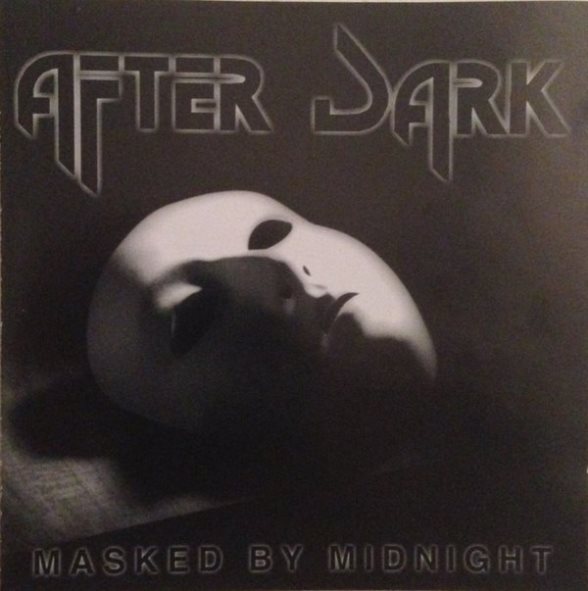
The album was to be titled Masked By Midnight. Everything was going ok, there was a picture promo 7” single released to promote the release of the album, a tour had been set up supporting the rock band “Diamond Head “and it seemed that After Dark now in the middle of the New Wave Of British Heavy Metal boom were destined for bigger things. But the album ended up costing Neil a lot more money than was originally budgeted for added to that the tour with Diamond Head which we had to buy on to had really broke the bank so it was decided that the release of the album would be put back after all we still had the picture single to promote.

The tour which was in January/ February 1984 was a great success for both bands Probably slightly more so for After Dark judging by the comments we received and not only from the fans.

I don’t know why everything went wrong after the tour except that Neil Howard fell ill and had to go into hospital for quite a time.

The band just drifted apart after the success of the Evil woman single and doing the album and the tour we were brought back down to earth and went our separate ways.


Q. - And how do you feel about the reissue of the compilation Masked by Midnight (The Anthology)?

Steve - However the After Dark story does not end there as during an interview with “That’s It “fanzine for Dangerous Age it was mentioned that the After Dark singles Evil Woman and Deathbringer were very sought after on the collector’s market and if we had any more material, it would also do very well so the Album “Masked by Midnight” was released on the German record label “Art of Music” 1n January 1996

And then rereleased in November 2018 as Masked by Midnight The Anthology with extra tracks: Evil Woman 1981, Johnny, Lucy, Deathrace, Too Late and Rock and Roller.

This was released on Skol Records (big thanks and great respect to Bart Gabriel) We were stunned and very pleased about this.

It was during this quiet period that I worked for a while with Zak Starkey and his band The Next. I did 2 gigs with him and then he got me to do a track for a pending single which was a cover of the soul classic Midnight Hour. I also had a call from an old friend mentioned before in this story Richard Griffiths He was working for Virgin 10 Records and they had just signed Gary Moore and he wanted a singer so Richard got me to go up to the Marquee club where Gary was playing and all looked promising except I never even got to meet Gary let alone sing with him because the record company unknown to Richard had already signed Greg Lake to sing with him, I was very disappointed.

Q. - Later on came Dangerous Age, how did it all start?

Steve - 1991 saw the coming together of DANGEROUS AGE. It was only through a comment by Ian Fosters lovely daughter Bonnie saying you guys should play together again that actually made me think well why not, Ian seemed game for it so we started putting a few ideas together. To start with I played bass guitar and sang, Tiff Turtle played lead guitar Fozzy played drums and after a short while Mick Hare came in on second lead guitar.

We Wrote and rehearsed original material in woodcray manor studio Wokingham for a time then moved to Alleycat studios in Reading.

It was at this point that the owner of Alleycat (who I’d known for a long time). Came in to a rehearsal had a listen and proposed that we go into his recording studio and put down 4 tracks. Fozzy then suggested that it would be great to use keyboards on the recordings so we asked rob Bridgman if he would be up for it he said yes and promptly came along to the next rehearsal to learn the material. I think it’s fair to say that in his own words if I recall them correctly f!!!!!g hell this is awesome and Rob became a permanent member from that day.

The 4 tracks we recorded were:

On The Road.

Dangerous Age.

A Place In My Heart.

Follow Your Heart.

We worked pretty hard on the songs and with Fozzies production skills got a really good result. However, another change in the lineup was about to happen.

Tiff left the band for another project he had been working on we were all very disappointed at the time he was a great old friend and well-respected guitarist and as fate would have it we would never play together again.

We had actually been writing and recording more songs at Alleycat with Tiff before he left, another four had been recorded but only very roughly and had’nt even been mixed in any way these titles were: Breaking My Heart Again/ Amazed/ No Way Out/ A Little Love. This is when something happened that we’d given up on years ago.

The demo tape of the first 4 songs had been taken to a music trade fair in Germany and a German record company called Long Island records liked it and wanted us to do an album so at this point we had 4 demo tracks 4 roughly recorded tracks and we would have to write 2 more songs to make a 10 track CD.

Q. - The cd Troubled Times, was recorded around 1995, what do you recall from these recording seasons?

Steve - So we used all the basic demo tracks i.e. drums/bass and did overdubs where required i.e. new guitar tracks new vocals, keyboards, Fozzy then spent hours going through the production on each track changing things redoing odd things until everything was master quality. For the 2 extra songs needed we reverted back to 2 Heartbreaker songs one written by Fozzy “Losing Touch” the other written by myself and Fozzy “Settle Down Easy, both were written back in 1976. But we recorded them and they sounded great even after all those years.

Although we kept most of Tiffs guitar tracks, some were erased (something that we regretted later on for a couple of reasons) mainly because we used a few guitarists on the album notably Mick Hare who had rejoined the band thankfully and the ex After Dark 2nd guitar player J.C.(Jerry Christopher). Darren Nicklass also played on some tracks.

So here we now were in 1995 with a record deal and an album release what the hell was going on.

The album was to be called “Troubled Times” and the track list was as follows:

Follow your heart.

A little love.

Dangerous age.

A place in my heart.

Losing touch.

Breaking my heart.

Settle down easy.

On the road again.

Amazed.

No way out.

It was released on May 15 1995 mostly in Germany-Holland -Scandinavia and a few smaller territories.

Q. - Did you approach a record deal at that time or was the album self-released?

Steve - Various communications followed from German rock magazines and fanzines,and a couple of interviews were done over the phone.

One interview with a fanzine called “That’s It” revealed an interest in the old After Dark singles “Evil Woman” and “Deathbringer” stating that they were still being sold as collectors items in Germany, (a bit of news that I knew nothing about) .

It was suggested that the album would do well if released and so “Masked By Midnight” was released in January 1996.on the German record label Art of Music. Well, this was totally out of order 2 albums out in the space of a year.

In late summer1996 Dangerous Age were back in the studio recording again this time 3 tracks were concentrated on: “Berlin Berlin” “Mister Moonlight” (the new version) And “Mercy” some other backing tracks were recorded as well.

It was on the night of 30th of December after we were mixing these tracks that the studio burnt down, we had gone home at 11oclock and by 2-30 am Alleycat studios was ablaze. Of course, everything anywhere near the studio was destroyed including all the master tapes to “Troubled Times” and all the new stuff, let alone god knows how many other artists work.

This was a major blow to the band which now had an adverse effect on all of us. All we did now was rehearse and waited in hope to be able to go into a studio of some sort to hopefully record what would be the second album. Apparently the dat tape of the mixes of Mister Moonlight and Berlin Berlin survived because Warren Basset our studio engineer had taken them home on the night of the fire.

Dangerous Age carried on working doing a lot of rehearsing and played the occasional gigs but again drifted apart for one reason or another.


Q. - So what are you doing these days? Do you still play in any band? Tell us a bit about it.

Steve - I then spent seven years playing in a covers band called “Highway” doing Free /

Led Zeppelin / ACDC covers and had a really great time doing it.

Highway played a lot of gigs in the seven years we were together and became a very well received and respected outfit on the circuit but like all covers bands there is only a certain shelf life and we could not go any further with it.

As for today I still keep in touch with the guys from After Dark, Mick Hare and I have been working on some new material for the new Dangerous Age album (currently in pre-production). I speak mostly via messenger with Ian King and John Metcalfe. Also Dangerous Age members I am in constant contact with Ian Foster and Rob Bridgman.

During 2019 and 2020 I recorded a 15-track solo album called “The Rain and the Fire”

Produced by Steve Gresswell which will be released later this year 2021.

Q. - How do you want to end up this interview? Anything more you want to say?

Steve - There are also plans to rerecord some of the Heartbreaker songs from 1974 to 1977. And release these on an album called “The Second Coming” (some have already been recorded). So quite a lot still going on and exciting times ahead.

In reflection of my musical career, I have to say that when I look back, I have worked with some great musicians a few famous ones and a lot that should be famous but are not, but I guess all in all the sheer talent shines through and we should all be thankful at what we have achieved together great music and companionship.

Thank you for your time, and wish you all the best for the future!

Dreamcatcher – Bleeding Heart (2025)

  Formed in Paris in 2001, Dreamcatcher are a French heavy metal band known for blending classic metal influences with powerful storytelling...